Intergenerational trauma
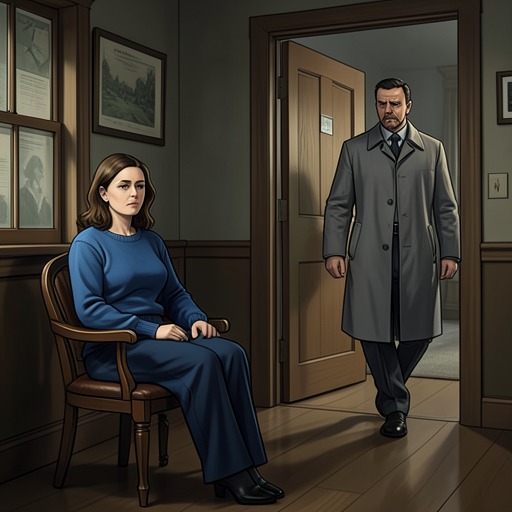
Stolen WanderIntergenerational trauma in Stolen Wander takes shape as a family pattern rather than an abstract diagnosis: a father’s absence and addiction help form the fears of the next generation, who must decide whether painful history will be repeated or interrupted. Rex Foster fears fatherhood because his own father disappeared before he was born; Nancy O’Neill fears raising a child in the resentment and misery she knew at home. Their relationship makes that inheritance immediate, while Bill O’Neill’s effort to seek rehabilitation offers a separate, uncertain possibility of change.
Inherited Wounds
Rex’s reluctance to become a father is rooted in abandonment that preceded his birth. He remembers his own father as someone who left before he could know him, and treats family itself as overrated. That rejection is more than a passing attitude: it gives Rex a model of fatherhood defined by absence, and makes the prospect of becoming a parent feel like entering a role he never wanted and does not trust himself to fill.
Nancy’s inheritance is different but equally binding. She has grown up in a household marked by her father’s drinking and the misery it brought. When Rex leaves after learning of the pregnancy, she is angry not only at his choice but at the possibility of bringing a child into an atmosphere of resentment and hate. She knows that atmosphere from experience and does not want to reproduce it. Her decision to leave rather than guilt Rex into staying is therefore also a refusal to build a family on coercion and accumulated bitterness.
The two histories meet in the pregnancy. Rex’s fear of becoming a father and Nancy’s fear of repeating her childhood do not produce the same response: he initially runs, while she prepares to leave. Yet both are acting under the pressure of family models they did not choose. The novel presents their separation as a point where inherited damage could become a new injury for their child, rather than merely a memory belonging to the adults.
Repetition and Recognition
The pattern becomes visible through repetition and contrast. Nancy initially fears Rex may become like Bill, and his departure gives that fear force. In a conversation with her mother, she recalls that Bill did not leave; he stayed and made life miserable. That distinction changes her understanding. Rex’s flight hurts her, but it is not the same as Bill’s prolonged presence amid addiction. Nancy can condemn Rex’s actions without treating the two men as interchangeable, and that recognition helps her decide to return to Salem.
Rex, meanwhile, begins to see his own conduct as more than an isolated mistake. While cleaning a deliberately filthy car as punishment at the Sons of Wolves Motorcycle Club, he spends the better part of an hour and a half thinking about Nancy and the pregnancy test. He imagines that staying with her might have allowed them to work through the news together, and recognizes that he instead ran and damaged what they had. The contrast between the degrading task and the intimacy he has lost makes regret concrete: he has time to see the cost of choosing flight, but regret alone cannot undo it.
Before going to Nancy’s apartment, Rex stops in the autumn drizzle and questions what he intends to offer her. He worries that he might return only to take what he wants and leave again, and connects his sense of inadequacy to the damage of his childhood. His pause matters because he has not previously examined his obligations to a partner so directly. The narrative makes self-questioning a step toward responsibility, not proof that he has already changed.
A Different Model of Fatherhood
The possibility of interruption becomes clearest when Rex speaks about the child. He insists that he is not his father and does not want to become the reason another fifteen-year-old joins a biker club. He has left the Sons of Wolves Motorcycle Club and explains that he has been banished from Salem. These are consequential choices, but Nancy still points out that he is asking her to trust him after leaving and failing to come back; she had to seek him out again. The novel does not make her doubt disappear simply because Rex now promises a different future.
Rex’s assurance is tied to a concrete intention: he offers to look at the ultrasound, be present when the child is born, and take part in the ordinary work of raising him. He tells Nancy that he loves her and proposes marriage, while admitting he cannot promise to be without difficulty. Nancy asks him to promise to stay until the baby is born. His answer is that he intends to stay, not merely meet that minimum. Their engagement thus counters the inherited expectation of abandonment, but the story gives the promise weight by retaining Nancy’s memory of what he has already done.
Rex also confronts the injury he has caused Bill. After realizing that he humiliated him by knocking him down without giving him a chance to defend himself, Rex apologizes. The moment extends his developing sense of responsibility beyond the romance: he acknowledges that his actions helped provoke the conflict and that another person’s response has a history. Bill tells him to be good to Nancy and not let drink take him, joining the family’s existing wound to the danger Rex fears for himself.
Bill’s Attempt to Break the Cycle
Bill’s history helps explain why Nancy’s caution persists. Cheryl remembers meeting him at college, where she studied literature, and recalls a handsome deputy who let her hold his badge and walked with her under the stars. She fell in love with him before his drinking became part of their life. Looking back, she cannot tell whether he began drinking deliberately or simply assumed he no longer needed to treat her well once he had secured her affection. Her uncertainty leaves the origin of his addiction unresolved, but the consequences for the family are not: Nancy grew up with the damage it caused.
Later, Bill comes to Nancy and Rex in tears to tell them he has contacted a rehabilitation facility. He describes a year-long program, including three months without contact with the outside world, as an opportunity to put his life in order and prove he can become a better man. He also acknowledges that Nancy did not deserve the childhood she had. His confession does not erase that childhood, and Nancy admits she does not truly believe his assurances that he can make things right. She comforts him anyway, distinguishing her wish for him to recover from certainty that recovery will succeed.
Rex kneels to address Bill directly, arguing that people can claw their way back from mistakes if they are willing to fight. He speaks from his own experience of being caught in a rut: men in the club may have joined to feel important or because they could not control their tempers, then found themselves unable to leave as years passed. For Rex, refusing to continue a life of violence can itself be an act of courage. His words reach Bill, who says he will fight and prove his commitment through action rather than ask Nancy to take his word for it.
Hope Without Certainty
The family’s later conversations preserve the difference between hope and resolution. Cheryl is reluctant to jinx Bill’s progress, but observes that he has gone longer without drinking than ever before. Nancy shares her hope while recognizing its risk. His improvement is meaningful precisely because the family has learned not to mistake a promise for a lasting change; rehabilitation begins a possible break in the pattern, not proof that the past has been repaired.
At the wedding, Rex again confronts the possibility that he does not deserve the life he is entering. He remembers having thoughts of running the previous night, not because he does not want to marry Nancy but because he doubts his worthiness. He cannot settle that doubt in advance. Instead, he imagines spending the rest of his life trying to become worthy of the commitment. The ending offers a deliberate alternative to the inherited pattern: not a claim that family wounds vanish, but a choice to remain, accept responsibility, and keep working against their repetition.